In this article, we’ll be addressing two common issues that users may encounter when right-clicking on an empty area on their Windows 11 or Windows 10 desktop or inside File Explorer.
- The first issue occurs when the “New” option is not visible in the menu that appears after right-clicking. This problem is often caused by modifications to the Windows Registry files as a result of either a new Windows update or the installation of new software on the computer.
- The second issue is when the “New” option is visible but the “New Folder” option is missing from the sub-menu. Again, this can also be caused by modifications to the Windows Registry files.
Quick Fix: Create a New Folder With Ctrl + Shift + N
If you just need a folder right now, you don’t need the right-click menu at all. Click an empty area of your desktop or open the folder in File Explorer, then press Ctrl + Shift + N. A new folder appears instantly, ready to be named. This works on Windows 11 and Windows 10 even when the New option is missing.
The steps below fix the menu itself so the option comes back permanently.
How the Right-Click Menu Looks in Windows 11
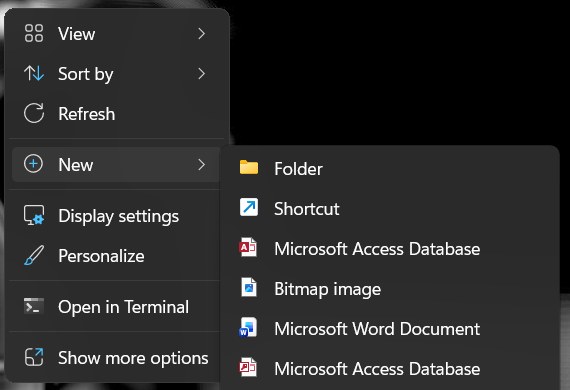
On Windows 11, right-click an empty area of the desktop and you’ll see New near the top of the menu, with Folder as the first item in its sub-menu. If New or Folder is missing here, use the fixes below. They work the same on Windows 11 and Windows 10.
Before you start: all of these fixes edit the Windows Registry. Make a backup first by opening Registry Editor, clicking File > Export, choosing All under Export range, and saving the file. If anything goes wrong, double-click that file to restore it.
Now, let’s delve into the solutions for resolving the “New” option missing from the right-click menu issue.
Fixing the ‘New’ Option Missing from Windows Right-Click Menu
- The initial step is to access the Registry Editor. You can achieve this by pressing the Windows Key + R on your keyboard OR you can click on the Windows icon located at the bottom-left corner of your screen to open the Windows menu and then search for “Run”.

- In the Run dialog box, input the text string “regedit” and press the “OK” button. This will display a permission pop-up window. Proceed by selecting the “Yes” option.
- From the left-hand side navigation pane, expand the “HKEY_CLASSES_ROOT” registry key. Scroll through the list of options and locate the “Directory” option. (Tip: To quickly navigate to the “Directory” option, you can begin typing “Directory” on your keyboard while the “HKEY_CLASSES_ROOT” key is selected, and the list will be filtered accordingly). Once you locate the “Directory” option, click the small arrow to expand it.

- To expand Directory > Background > shellex > ContextMenuHandlers, click the left arrow beside each nested object.

- Right click on “ContextMenuhandlers” and then select New > Key

- Rename it to “New”

- From the right-side panel, Right-Click on “Default” and then select “Modify”. This will open a
small pop-up window.

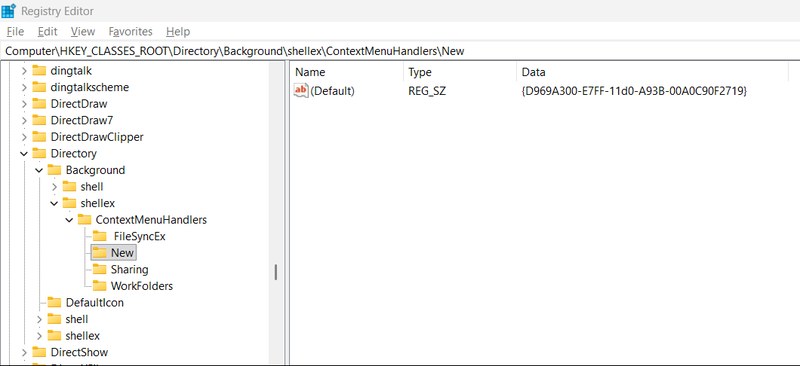
- Enter the value {D969A300-E7FF-11d0-A93B-00A0C90F2719} right below “Value Data” input field and click on “OK”

- Come back to desktop and Right-Click. This time you should see the “New” option in the menu.

Tip: to jump straight to a key, copy the path and paste it into the address bar at the top of Registry Editor, then press Enter. On a healthy Windows 11 PC, the New key looks like this:
How to Fix the New Folder Option Missing from the Right-Click Menu

-
- We will be using again Registry panel to fix this. Navigate to Registry “HKEY_CLASSES_ROOT” using the above process till step #3.
- Navigate “Folder” directory under “HKEY_CLASSES_ROOT”
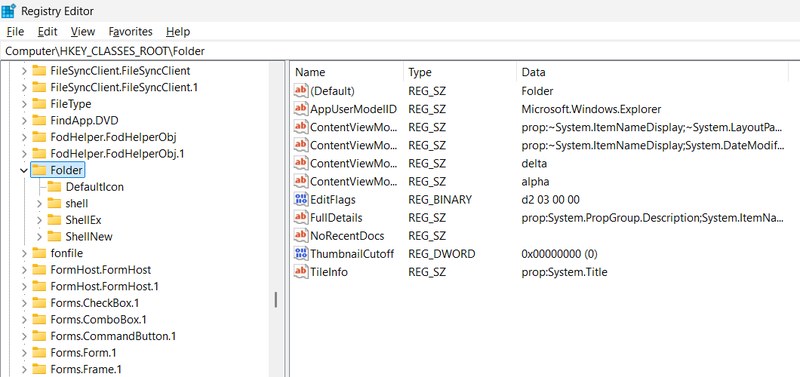
HKEY_CLASSES_ROOT\Folder 
- From the right-side panel, Right-Click on “Default” and then choose “Modify”

- Change “Default” value to “Folder” and then click OK

- Now go back to the desktop and right-click on empty area. You should see now the Folder option under the
New sub-menu

For reference, this is how HKEY_CLASSES_ROOT\Folder looks on a healthy Windows 11 PC, with (Default) set to Folder:
Still Missing? Check the Folder ShellNew Key
If New is back but Folder still doesn’t appear in its sub-menu, or clicking it creates something else, the ShellNew key is usually the cause. Some apps add values there that break it.
- In Registry Editor, go to:
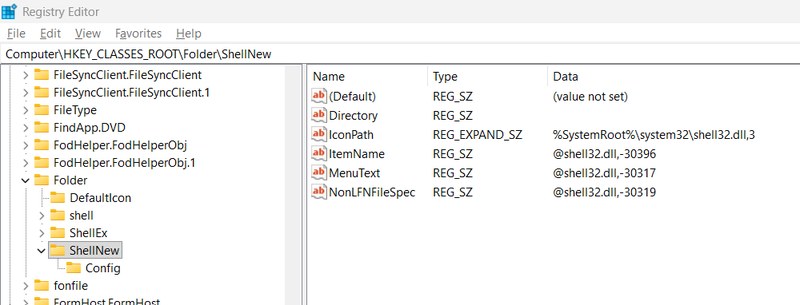
HKEY_CLASSES_ROOT\Folder\ShellNew - Look at the values on the right. If you see values named Handler or NullFile, right-click each one and choose Delete.
- Make sure a value named Directory exists. If it doesn’t, right-click an empty area, choose New > String Value, name it Directory and leave its data empty.
A healthy ShellNew key looks like this, with Directory, IconPath, ItemName, MenuText and NonLFNFileSpec, and no Handler or NullFile:
Restart File Explorer to Apply the Changes
Registry changes to the right-click menu don’t always show up straight away. Instead of restarting your PC, press Ctrl + Shift + Esc to open Task Manager, find Windows Explorer, right-click it and select Restart. Your desktop and taskbar disappear for a second and reload with the changes applied.
Looking for Folder Options Instead?
If you searched for “folder options missing”, you may be looking for the Folder Options window, where you can show hidden files, show file extensions and change how folders open. In Windows 11 it’s no longer in the ribbon:
- Open File Explorer.
- Click the three dots (…) in the toolbar.
- Select Options.
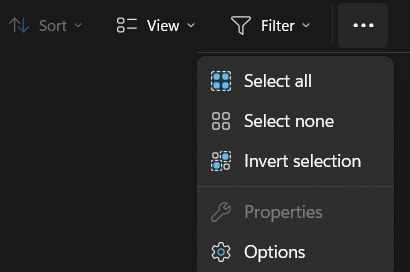
On Windows 10, click the View tab in File Explorer and then Options on the far right. You can also press Windows + R, type control folders and press Enter on either version.
Frequently Asked Questions
Why is the New option missing when I right-click?
The New option is controlled by a registry key called New under ContextMenuHandlers. Some software installs, cleanup tools or tweaks delete or change it. Recreating it with the value shown above brings the option back.
Is there a shortcut to create a new folder?
Yes. Press Ctrl + Shift + N on the desktop or in any File Explorer window.
Do these fixes work on Windows 11?
Yes. The registry keys are the same on Windows 11 and Windows 10. The screenshots above were taken on Windows 11 25H2.
Is it safe to edit the registry?
It’s safe if you follow the steps exactly and only change the keys mentioned. Always export a backup first, as described at the start of this guide, so you can undo any mistake.